Guardian Real-Time Fall Detection System
Hackathon Winner | Machine Learning | Object Detection | NLP | UX
Overview
Guardian is a real-time fall detection system built for hospitals, care facilities, and large spaces where staff coverage is limited. It monitors a space 24/7 using a camera feed, automatically detects when a person has fallen, and instantly alerts nearby responders via LINE, all without storing any identifiable facial data.
The system distinguishes between falling and sleeping using skeletal pose estimation, hip velocity, and aspect ratio analysis, solving the hardest problem in fall detection. When a fall is confirmed, responders are notified within seconds and can monitor the situation live through the dashboard.
My Role
AI/ML UX
Timeline
February 2025 – March 2025
Team
1 frontend engineer
1 NLP engineer
1 AI/ML engineer
The Problem
The Long Fall
Falls are the second leading cause of unintentional injury deaths worldwide. In hospitals and care facilities, the real danger isn't the fall itself, it's the time before someone finds you. We called this "The Long Lie." A person on the floor for over an hour faces serious risk of dehydration, muscle breakdown, and death. With limited night staff and large facilities, this gap is a real and unsolved problem.
The Solution
GUARDIAN
A 24/7 automated vigilance system that triggers an instant alert the moment a fall is validated. It acts as a Digital Supervisor that fills this gap during night shifts or in low-traffic areas like warehouses or hallways.
System Showcase
Fall Detected
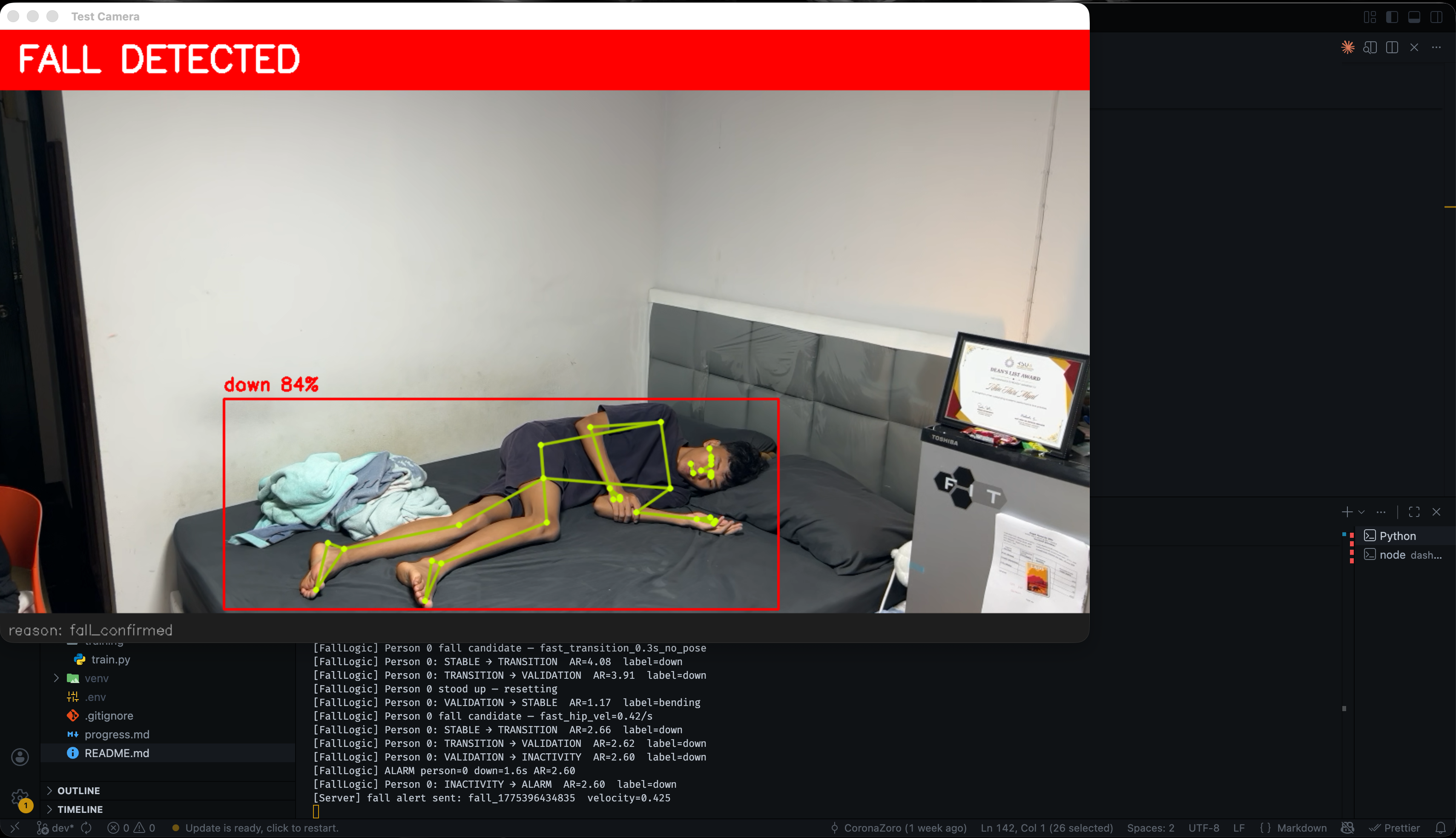
When a fall is confirmed, the status flips to red and an alert is sent instantly to nearby responders via LINE. The reason: fall confirmed velocity and position both crossed the threshold.
Sleeping
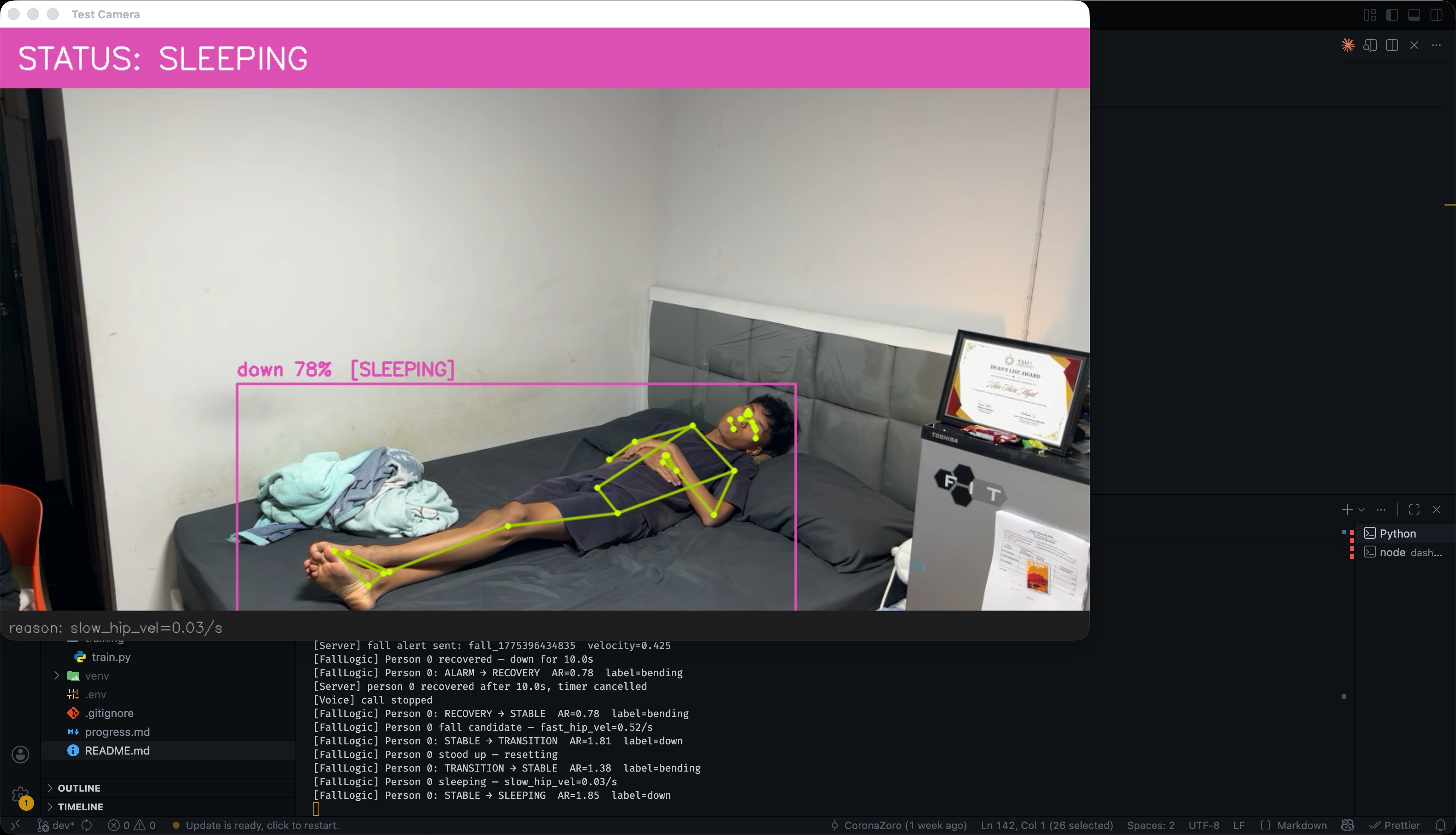
The biggest hurdle: sleeping looks almost identical to falling. Guardian uses skeleton overlay, aspect ratio, and hip velocity to classify the state as SLEEPING so no false alarm is triggered.
Dashboard
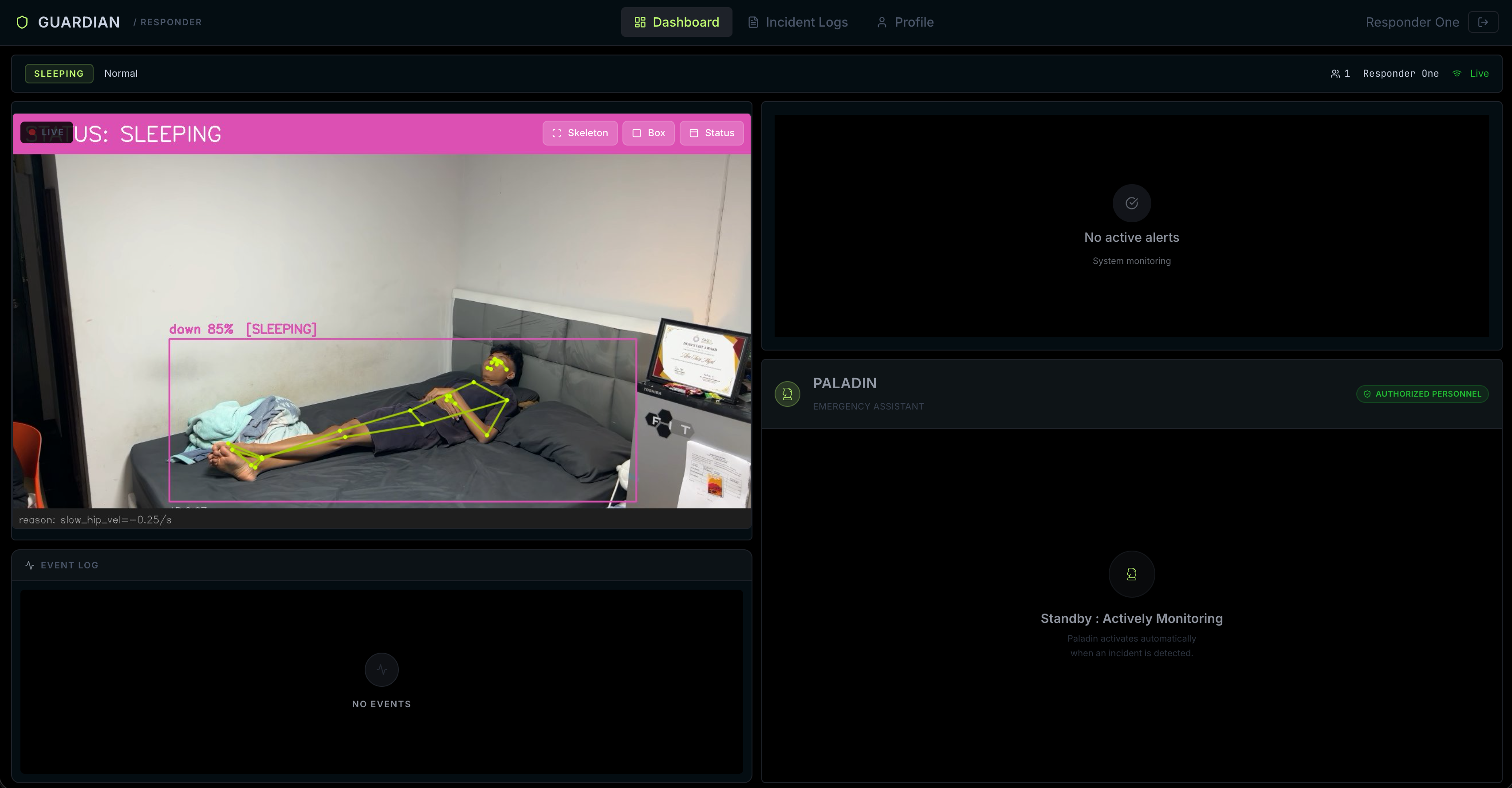
The responder dashboard monitors the live feed in real time. When no incident is active, the system stays on standby ready to be called up whenever.
Beyond the Prototype
01 — Faster Response
Traditional fall detection relies on someone walking past. With Guardian, a responder can be alerted and on their way within 60 seconds of a confirmed fall before "The Long Lie" even begins.
02 — Reducing Staffing Costs
Hospitals using virtual monitoring systems have reported reducing their reliance on 1-on-1 patient sitters by 75%, with annual savings of up to $4.7 million per facility.
03 — No Privacy Compromise
Guardian detects falls using skeletal pose and movement data, not facial recognition. No identifiable features are stored or processed, making it viable in privacy-sensitive environments like hospitals and care homes.
04 — Scales With Existing Infrastructure
No new cameras needed. Guardian runs on existing CCTV setups, meaning facilities can deploy it without significant hardware investment.
What I Learned
Guardian was my first time working with machine learning end to end from sourcing datasets and training a model to integrating it into a live system. I learned how to use FastAPI and WebSockets to pipe real-time detection data into a frontend, which pushed me to think about UX differently. Designing for a live feed means the interface has to communicate system states instantly so there's no loading screen to hide behind. It made me a more practical designer, one who thinks about how data actually moves before deciding how it should look.